In today’s digital world, where every click and purchase is a data point, the conversation around privacy is no longer a niche topic—it’s a core component of business success. For North American companies, this isn’t just a legal challenge; it’s an opportunity to build a stronger, more trustworthy relationship with your audience.
The reality is that consumer trust is at an all-time low. A recent study found that 78% of Americans are concerned about how companies use their data, and a staggering 62% don’t believe it’s possible to go through daily life without companies collecting information about them (Pew Research Center, “How Americans View Data Privacy,” 2023). This concern isn’t just a feeling; it impacts your bottom line. Research shows that 48% of consumers have stopped buying from a company due to privacy concerns (Tableau, “64 Alarming Data Privacy Statistics Businesses Must See in 2025”).
The solution is straightforward: a privacy-first website. By proactively addressing regulations like GDPR, CCPA, and PIPEDA, you can avoid costly fines and differentiate your brand to earn the loyalty of privacy-conscious customers.
The A-Team of Data Regulations: What You Need to Know
While the regulations can seem like a jumble of acronyms, they all share a common goal: to give individuals more control over their personal data. Here’s a quick breakdown of the key players:
GDPR (General Data Protection Regulation): This is the EU’s landmark law and is often called the “gold standard” of data privacy. If your website serves even a single EU resident—through a purchase, a newsletter sign-up, or just an IP address—the GDPR applies to you.
CCPA (California Consumer Privacy Act) & CPRA (California Privacy Rights Act): These laws give California consumers the right to know what data is being collected, the right to request its deletion, and the right to opt-out of its “sale” or sharing. This requires a visible “Do Not Sell My Personal Information” link on your website.
PIPEDA (Personal Information Protection and Electronic Documents Act): As Canada’s federal privacy law, PIPEDA sets the rules for how private-sector organizations handle personal information. It is built on a foundation of meaningful consent and strong accountability.
The complexity doesn’t stop there. With 20 U.S. states having enacted their own comprehensive data privacy laws (White & Case LLP, “US Data Privacy Guide”), the need for a strategic, future-proof approach is more critical than ever.
The Pillars of a Privacy-First Website
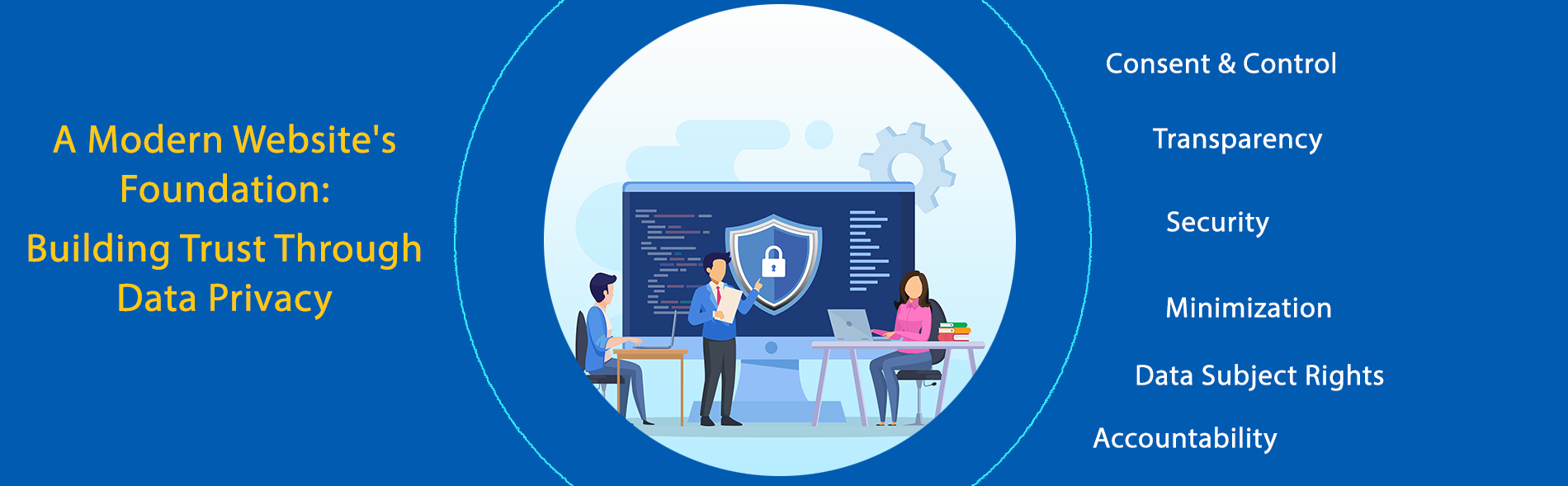
Building a website that is both functional and compliant requires a focus on core principles. Our approach is centered on these key pillars:
Consent & Control: Empowering users to make informed choices about their data. This includes granular cookie consent and clear opt-in forms.
Transparency: Providing clear, accessible information about your data practices through a well-written privacy policy.
Security: Implementing technical safeguards like SSL encryption and secure databases to protect user information from breaches.
Minimization: Only collecting the data that is absolutely necessary for your business operations.
Data Subject Rights: Creating a clear and easy process for users to exercise their right to access, edit, or delete their personal information.
Accountability: Maintaining records and processes to prove compliance with data privacy laws.
These principles are the foundation of a trusted digital presence.

Your Website Compliance Checklist: A Strategic Approach
Ignoring these laws isn’t just bad for your brand; it can be financially devastating. The average cost of a data breach for a U.S. company is a record-breaking $10.22 million (IBM, “Cost of a Data Breach Report 2024”). Fines for non-compliance are on the rise, with major companies facing penalties in the hundreds of millions. A recent report revealed that a shocking 76% of the most-visited websites in the U.S. are not compliant with CCPA/CPRA opt-out signals (Privado.ai, “The State of Website Privacy Report 2024”).
At DMG Weblabs Inc., a leading web development company in Toronto, we believe that compliance is an opportunity, not a burden. We don’t just build beautiful, high-performing websites—we build them on a foundation of trust and security.
Here’s how we help our clients create a privacy-first website:
- Conduct a Data Audit: We help you understand exactly what data your website collects, why it’s collected, and where it’s stored.
- Privacy Policy Guidance: We guide you through the process of obtaining a clear, legally sound privacy policy from your legal counsel and ensure it’s properly implemented on your website.
- Implement Robust Consent Mechanisms: We design granular consent solutions that give users control over which cookies they accept, including unticked checkboxes and a prominent “Do Not Sell” link where required.
- Strengthen Your Website Security: We build secure websites with SSL certificates, strong password policies, and a proactive approach to software updates to patch vulnerabilities before they can be exploited.
By partnering with us, you get a team of experts dedicated to protecting your business, building your brand, and earning the trust of your customers.
Ready to turn compliance into a competitive advantage? Contact us today for a free website privacy consultation and see how we can help you navigate the digital landscape with confidence.
DMG Weblabs Inc. is your trusted partner for web design in Toronto, delivering SEO-optimized, accessible, and sustainable websites since 2010.
Get in touch with us online, follow us on Facebook, Instagram, or X (Twitter), or give us a call to get started.